

We have made every effort to provide complete shows. However, some shows "overlap" and
use puppets and/or props from other shows. We have tried to indicate that on the inventory lists.
Ask about bundle pricing. Runtimes are approximate.

Runtime 40 minutes
(1968)
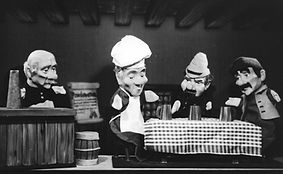
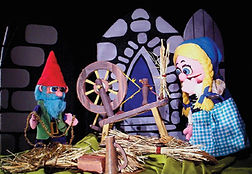
A reimagined version of the Brothers Grimm tale about a little man that spins straw into gold. This was one of the first productions for the Melikin Puppets and uses the 12-inch, latex-head hand puppets. Originally produced for school assemblies, it was removed from the school circuit and placed in various “non-school” repertoire.



SOLD
Inventory Sheet
Runtime 40 minutes
(1980)
This production was rebuilt in 1980 using the larger polyfoam style puppets. The soundtrack remained the same and still utilized the same special effects; A spinning wheel that actually spun straw into gold and Rumplestiltskin disappearing into a puff of smoke. The smoke effect (using a small black powder device) was replaced with a party popper filled with talcum powder and glitter for safety concerns.
asking $2,000.00


(1969)
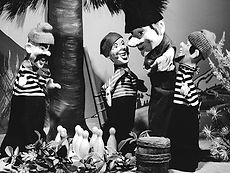
The classic Washington Irving story about a man who falls asleep for 20 years in the Catskill Mountains and awakens to a changed world. This production uses the 12-inch, latex-head hand puppets. Special effects include a kite flying sequence, a game of “nine pins” in which a bowling ball rolls across the stage and knocks down the pins. They are reset by pulling a string under the playboard and standing them upright.


Inventory Sheet
This show has not been fully inventoried at this time. Please check back later.
Runtime 40 minutes

(1969)
The classic Charles Dickens' story was adapted and simplified to the puppet stage and was always one of the company’s favorite productions. Superb acting, music, sound effects and staging make this the most technically best production in the Melikin repertoire. This production uses the 12-inch, latex-head hand puppets.


asking $1,500.00
Runtime 45 minutes

(1970)
Adapted from the Daniel Defoe story about a sailor who is stranded on a deserted island and befriends a native named “Friday.” The story follows Robinson’s adventures from a little boy to full grown man on the island and his eventual rescue. This production uses the 12-inch, latex-head hand puppets.
asking $750.00
Runtime 50 minutes


SOLD

Runtime 49 minutes
(1972)
Jamey’s father tells him a bedtime story of Aladin and his magic lamp, but does not finish it. Through his dreams, Jamey continues the story in this elaborate production. Staging includes many special effects such as a genie appearing out of a vase, magical quick change of clothes, a six-armed dancing idol, and the all-seeing eye ruby. This production uses the 12-inch, latex-head hand puppets.
asking $500.00


SOLD

asking $500.00
(1973)
The Melikins went back to another Washington Irving classic - The story of Ichabod Crane, a school teacher assigned to the little town of Sleepy Hollow, and his encounter with the legendary Headless horseman. This production uses the 12-inch, latex-head hand puppets.
Runtime 43 minutes


SOLD
Runtime 43 minutes

asking $4000.00
(1993)
Now using the arena style stage, the Melikins rebuilt the production using the larger polyfoam style puppets. Because of the open area above the main performing area, they were able to do “double staging.” It’s in this area that final scene in which Ichabod is chased by the horseman takes place.


Runtime 48 minutes
(1971)
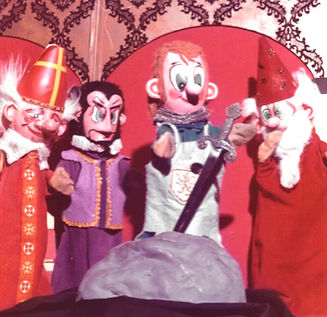
Adapted from several stories about how Arthur, son of King Pendragon, became King of England by pulling a sword from a stone. This is a very busy production for the puppeteers. There are several characters and special effects including one Merlin becoming two Merlins and the transformation of an “ordinary” table becoming the stone which encases the sword. This production uses the 12-inch, latex-head hand puppets.
asking $500.00

SOLD

Runtime 48 minutes
asking $4000.00
(1981)
This was the first production to be adapted to the larger polyfoam style puppet and used the arena style stage. Double staging was created placing Merlin’s castle tower room above the main stage. A wall conceals the room and is lowered to reveal the scene to the audience. Many of the original effects were retained and the gimmicks in Merlin’s room could now be expanded.
![Aesop_Photo[1]_0001.jpg](https://static.wixstatic.com/media/9e1674_93e4630afab9472487d6069ab837558c~mv2.jpg/v1/crop/x_111,y_292,w_528,h_604/fill/w_235,h_268,al_c,q_80,usm_0.66_1.00_0.01,enc_avif,quality_auto/Aesop_Photo%5B1%5D_0001.jpg)

(1974)
This production (aka: Aesop I) was the first to use the polyfoam style puppet. Because of the larger style, a new stage was created – The arena style stage. Aesop tells six of his fables throughout the production adapting them just a bit to fit the puppet production. This was also produced as a one person show but is often performed with two puppeteers.

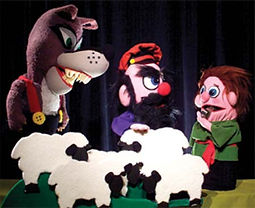

Aesop
The Sheperd Boy Who Cried Wolf
The Lion and The Mouse
The Country Mouse and The City Mouse
asking $3500.00
Runtime 48 minutes


(1975)
In this original Melikin production, Danny Doodle has a school assignment: Write an essay about who you think is the greatest American and why. To help him decide who that might be, Uncle Sam appears and takes Danny through history to meet some “great Americans”. Produced primarily for America’s bi-centennial, careful scripting does not actually mention it, allowing it to be presented any time as a patriotic show. This was also produced as a one person show but is often performed with two puppeteers.


asking $3000.00
Runtime 40 minutes


(1976)
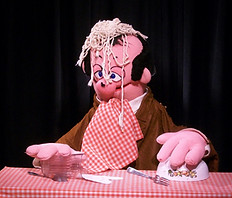
Mr. Aesop returns to the stage to tell more of his fables. Four new fables are told along with a rematch of the tortoise and the hare. This production was presented at the 1978 Puppeteers of America National Festival and receive the UNIMA-USA award for Excellence in Puppetry.

The Grasshopper and The Ants

Androcles and The Lion
Ten Speed, Barney and Aesop
The Stout Man and The Fly

asking $3500.00
Runtime 44 minutes

Runtime 48 minutes

(1977)
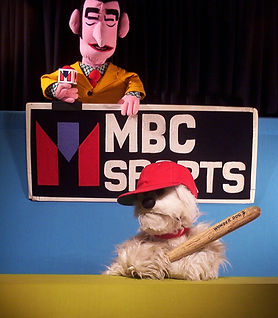
The “Dream Peddler” serves as the host for this presentation that introduces poetry to young theatre audiences, and to Darlene Q. Dimples, who doesn’t like poetry. She soon changes her mind as he tells her the poems “Pied Piper of Hamelin”, “The Raven” (with the help of Edgar Allan Poe), and “Casey at the Bat” starring the Melikins' pet dog, “Woofer.”
asking $4000.00




(1978)
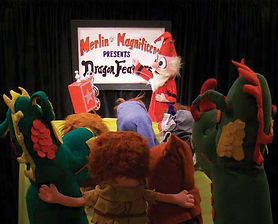
The Melikins wanted to produce a show about the myths and legends of dragons so they consulted with the foremost authority on the subject: Merlin the Magnificent! He serves as the host for the presentation telling the audience three stories involving the beasts. The show concludes with a brief history of the Chinese Dragon and, with the help of volunteers from the audience, an authentic dragon dance. The 35-foot long dragon is a reproduction of the 100-foot long dragon used in Chicago’s Chinese New Year parade. With the help of the Chinese Consulate in Chicago, the Melikins spent almost 100 hours creating their own dragon.


asking $5000.00
Runtime 48 minutes

asking $3000.00
(1979)
This production is dedicated to the great nation of original residents of this land – The Native Americans. Using double staging, the host sits up above next to a campfire in a forest scene, telling the audience stories from Native American folklore. The presentation includes three stories and concludes with the classic, “Injun Summer,” by John T. McCutcheon brought to life on stage*.
Runtime 47 minutes


NOTE: When this production was originally written, much care was taken not to offend, but to honor the Native American people. As with all the shows produced by the Melikin Puppets, a great deal of research was done for Totem Tales. Mel would sift through volumes of books at the local library and stay as true as possible to the written words and ideas of the authors. The stories in Totem Tales are from those books, several written by Native Americans, and reflect the rich traditions and folklore that was passed down from one generation to another. However, today there may be content that some may consider “offensive”. Some editing to the soundtrack provided may need to occur. The soundtrack provided is the original by The Melikin Puppets.
The famous cartoon first appeared on September 30, 1907, on page 1, the answer to a looming deadline on a slow news day. John T. McCutcheon, inspired by a string of beautiful, warm autumn days and remembering his youth in Indiana, conjured up the illustration that became one of the most popular features in Tribune history.
The Tribune reprinted it in 1910, on page 4, in response to readers' requests, and then annually this time of year from 1912 to 1992.
(https://drloihjournal.blogspot.com/2017/10/the-history-of-john-t-mccutcheons-1907.html)
But current inappropriateness in itself is not a strong enough argument to clinch the case for dropping forever what is considered by many to be a classic bit of Americana, especially one so much a part of the Tribune’s own institutional traditions. It would be akin to banning “Tom Sawyer” because of Mark Twain’s “Injun Joe” character.
Times change. Language changes. Sensibilities change. As readers and viewers we should have the good judgement to understand those changes and accept an antiquated work in the context of its era.
(https://chicagology.com/newspapers/chicagotribune/injunsummer/)

asking $5000.00
(1980)
Stories about the myths and legends of some great American folk heroes are told by three “old-timers” hangin’ ‘round the general store. Double staging is used in the presentation with the general store above and the stories told on the main stage. The early life of Daniel Boone and a story about Johnny Appleseed are told and concludes with a telling of the life of Paul Bynyan. Throughout this story, Paul gets bigger and bigger and culminates with a “life-sized” Paul looming into and over the stage.


